
TV Shows vs OTT Shows: Production, Rules, Revenue & Who Earns More (2026 Guide)
Compare TV shows vs OTT shows in terms of production, regulations, budgets, and earnings. A detailed 2026 industry guide explaining how both models work and who earns more.


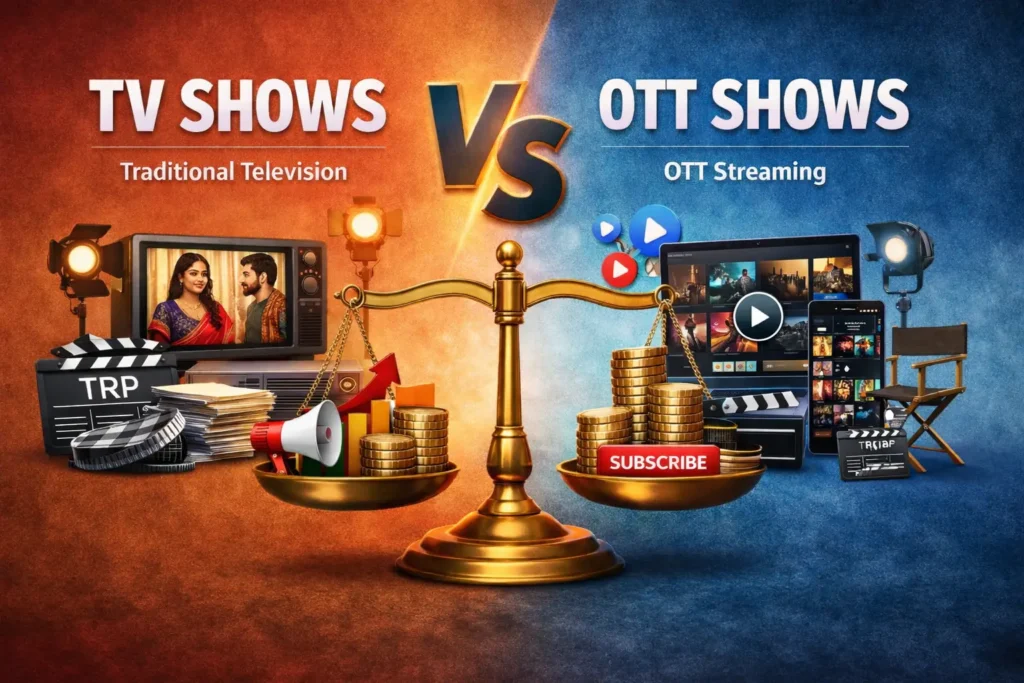
Introduction Of TV Shows vs OTT Shows
India’s entertainment ecosystem is currently defined by two parallel systems: traditional television broadcasting and Over-The-Top (OTT) streaming platforms. The ongoing comparison of TV Shows vs OTT Shows highlights how differently these two industries operate in terms of reach, production scale, storytelling formats, and monetization models. While television continues to dominate household penetration across the country, OTT platforms have significantly reshaped content structure, creative freedom, and digital revenue strategies.
According to the Broadcast Audience Research Council (BARC India), television reaches over 900 million individuals across India. In contrast, industry reports by FICCI-EY estimate India’s OTT user base at approximately 100–150 million paid and active digital viewers, with rapid year-on-year growth.
This article presents a structured comparison between television and OTT across four dimensions:
- Production process
- Regulatory framework
- Revenue model
- Earnings potential for actors and producers
Production Model: Daily Broadcast vs Season-Based Development
Television Production Model
Television operates on a continuous broadcast cycle. Daily fiction shows typically produce 22–26 episodes per month to maintain weekday slots. Production timelines are compressed.
Key Characteristics:
- Scripts often written concurrently with shooting
- Multi-camera indoor setups
- Parallel shooting units
- 10–14 hour workdays
- 300+ episodes annually for successful shows
Television content is commissioned by channels such as Star Plus, Zee TV, and COLORS TV. The channel typically pays a fixed per-episode fee to the production house under a licensing agreement.
Budget Estimates
Industry trade estimates suggest:
- ₹10–25 lakh per episode for mainstream Hindi daily soaps
Actual budgets vary depending on cast scale and production house.
OTT Production Model
OTT series follow a season-based structure. Instead of daily output, creators develop 6–10 episode seasons over extended timelines.
Platforms such as Netflix, Amazon Prime Video, and Disney+ Hotstar commission projects.
Key Characteristics:
- Full script lock before shoot
- Location-based filming
- Cinematic production values
- Extended post-production cycles
- 4–8 month shooting schedules
Industry reports indicate OTT budgets can range from ₹2–10 crore per episode depending on scale and casting.
For example, Sacred Games reportedly had a multi-crore season budget as per media coverage at the time of release.
Regulatory Framework
Television Regulation
Key restrictions include:
- Limited depiction of violence
- No explicit adult content
- Controlled language
- Religious and political sensitivity compliance
Prime-time television content is designed for universal (family) audiences.
OTT Regulation
OTT platforms in India operate under the Information Technology (Intermediary Guidelines and Digital Media Ethics Code) Rules, 2021.
Unlike traditional broadcasting, OTT platforms:
- Follow age classification systems (U/A 13+, 16+, A)
- Implement self-regulation mechanisms
- Allow mature storytelling within regulatory boundaries
This framework provides comparatively higher creative flexibility, while still being legally accountable.
Revenue Model Comparison Of TV Shows vs OTT Shows
Television Revenue Structure
Television is advertising-driven.
Channels generate revenue through:
- Ad slots (10–30 seconds)
- Sponsorship integration
- Brand placement
High-performing prime-time shows can command premium advertising rates, according to trade publications and BARC performance data.
The sustainability of a TV show is directly tied to weekly TRP (Television Rating Points).
OTT Revenue Structure
OTT platforms primarily rely on:
- Subscription revenue (SVOD model)
- Hybrid ad-supported tiers (AVOD + SVOD)
- International content licensing
Performance measurement relies on:
- Completion rates
- Subscriber acquisition impact
- Viewer retention metrics
- Engagement analytics
Unlike TV, success is not measured weekly but through long-term user behavior data.
Earnings Analysis: TV vs OTT
All figures below are based on publicly reported media coverage and industry estimates.
Television Actors
Established lead actors in long-running TV shows may reportedly earn:
- ₹50,000 to ₹5 lakh per episode
- 20–26 episodes per month
Annual earnings for top-tier actors can reach several crores depending on show longevity.
However:
- Work schedules are continuous
- Contracts are tied to show duration
- Income stops if the show ends
Example: Anupamaa has consistently ranked high in TRP charts, contributing to strong earning potential for its lead cast.
OTT Actors
OTT actors are typically paid a fixed project fee per season.
Reported industry ranges:
- Supporting roles: ₹20–50 lakh per season
- Lead roles: ₹1–5 crore per season
- Established film actors: Higher negotiated contracts
For instance, Saif Ali Khan reportedly received multi-crore compensation for Sacred Games, as per entertainment media reports.
OTT schedules allow actors to take on additional projects between seasons.
Case Studies
Television Example: Kundali Bhagya
- Long-running weekday fiction format
- 1,000+ episodes
- Stable advertising-driven revenue
- Consistent audience base
OTT Example: Panchayat
- Short season format
- Critical acclaim
- Cultural impact beyond urban metros
- Season-based monetization
Structural Differences at a Glance
| Parameter | Television | OTT |
|---|---|---|
| Format | Daily broadcast | Season-based |
| Revenue | Advertising | Subscription + Hybrid |
| Regulation | Broadcast compliance | IT Rules 2021 framework |
| Production Pace | Continuous | Project-based |
| Budget Scale | Moderate | High |
| Creative Freedom | Limited | Comparatively higher |
Conclusion
Television and OTT platforms operate under fundamentally different economic and creative models.
Television remains dominant in reach and advertising scale, particularly in non-metro and rural markets. OTT platforms, however, have redefined narrative depth, cinematic production quality, and global distribution potential.
In earnings terms:
- Television offers stable, recurring income
- OTT offers higher per-project compensation with greater flexibility
Neither model is inherently superior; both serve distinct market segments within India’s expanding media economy.
Editorial Disclaimer
The content published on this website is intended for informational and educational purposes only. All opinions expressed in this article are based on independent research, industry analysis, and publicly available information related to India’s entertainment ecosystem, including traditional television and OTT streaming platforms.
We do not claim affiliation with, endorsement by, or official representation of any television network, production house, or OTT platform mentioned. Any trademarks, brand names, or logos belong to their respective owners.
The views expressed are solely those of the author and are intended to provide general insights into industry trends, storytelling formats, and monetization models. Readers are encouraged to conduct their own research before making any business, investment, or subscription decisions.
If you believe any content requires correction or clarification, please contact us for prompt review and necessary updates.

Hindi TV Serials 2026: The New Golden Age of Indian Television and Changing Viewer Trends

A deep industry analysis of Hindi TV Serials 2026, exploring new trends, popular shows, changing formats, audience behaviour and why Indian television is entering a new golden age.