
Why Many Reality TV Winners Fade from Public View
Explore why many reality TV winners struggle with fame and finances after the show ends, and how life continues once the cameras stop.


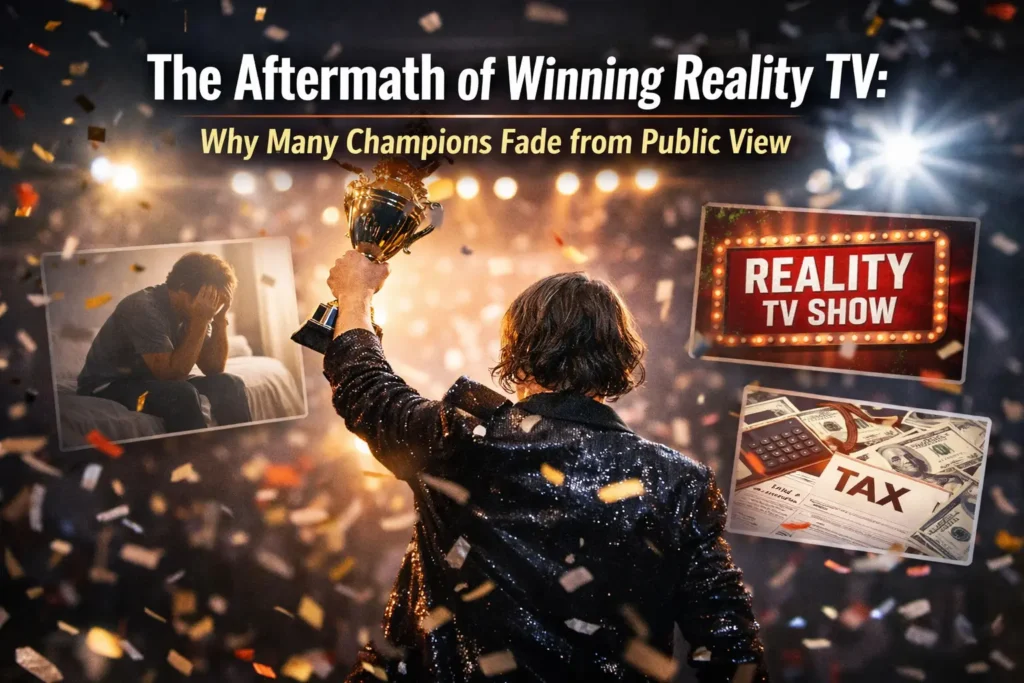
Reality television thrives on transformation. Contestants enter as ordinary people and, within weeks or months, emerge as winners crowned with fame, money, and national attention. For viewers, the final episode feels like a beginning — the moment when a new celebrity’s real journey starts.
However, in reality, winning a reality TV show is often the peak rather than the launchpad. Many winners quietly step away from public attention after their victory, leaving audiences wondering what happened next. This pattern is not accidental. It reflects how reality TV fame works, how prize money is structured, and how difficult it is to turn short-term exposure into long-term stability.
Winning a Show Is Not the Same as Building a Career
Reality TV competitions are designed for entertainment, not professional development. A win proves success within a controlled format, not necessarily in the real world.
For example:
- Singing competitions reward performance under pressure, not songwriting, branding, or long-term audience building.
- Strategy-based shows reward adaptability and social gameplay, not transferable professional skills.
Once the season ends, the built-in promotion disappears. Winners are no longer supported by producers, editors, or marketing teams. Without an existing professional foundation, many struggle to convert attention into sustainable opportunities.
The Illusion of “Life-Changing” Prize Money
Large cash prizes appear transformative, but their impact is often overestimated.
- Taxes significantly reduce take-home amounts.
- Sudden wealth brings financial pressure, family obligations, and lifestyle inflation.
- Most shows do not provide financial education or long-term planning support.
For some winners, the money improves their lives quietly — paying off debt, funding education, or securing housing. For others, poor investments or unrealistic expectations lead to stress rather than freedom.
The Psychological Cost of Sudden Fame
Reality TV creates an intense but temporary social environment. Contestants are surrounded by cameras, staff, and public attention for months. When the show ends, this stimulation abruptly stops.
Many former winners have spoken publicly about:
- Post-show anxiety or depression
- Difficulty returning to normal routines
- Loss of identity once public validation disappears
Stepping away from the spotlight is often a coping mechanism rather than a failure.
When “Disappearing” Is a Deliberate Choice
In the Indian television landscape as well, winners of major shows such as singing and reality competitions often struggle to maintain visibility once network-driven promotion ends.
Not all winners who leave public view do so because they were unsuccessful. Some actively reject ongoing media exposure.
Several Survivor winners, for example, returned to their previous careers after winning. Others declined future television appearances, choosing privacy over visibility. Their decisions highlight an important truth: fame is not universally desirable or beneficial.
In some cases, non-winning contestants remain more visible because they developed strong on-screen personas, while winners completed their narrative arc by winning and had little incentive to continue performing for audiences.
When Things Go Wrong
There are also cautionary examples where sudden wealth and exposure magnified existing personal issues. Without support systems, structure, or guidance, a small number of winners experienced legal, financial, or personal crises after their wins. These cases underline the risks of instant fame without preparation.
Rethinking What “Winning” Really Means
Culturally, we equate winning with visibility and long-term celebrity. Reality TV challenges that assumption. For many participants, success is not measured by continued fame but by improved quality of life away from cameras.
The real issue is not that winners disappear, but that the industry offers little support after production ends. Shows generate significant profit from contestants’ stories, yet long-term mental health resources, career guidance, and financial planning are rare.
Conclusion
Reality TV winners who fade from public attention are not necessarily failures. Many simply recognize that the spotlight was temporary and choose stability over visibility. Their experiences reveal the limitations of reality TV fame and remind us that sustainability, not attention, is the true measure of success.
When the confetti falls and the cameras shut off, the hardest challenge begins — building a real life without a script. For many winners, choosing anonymity is not a loss, but a rational and healthy decision.
Editorial Disclaimer
This article is an editorial analysis based on publicly observed trends in reality television and media coverage. It does not focus on any single individual and is intended for general informational and commentary purposes only. All views expressed are independent and do not represent any television network, production house, or broadcaster.

Business Lessons from Shark Tank India Every Entrepreneur Should Know

Shark Tank India is often consumed as prime-time entertainment—full of dramatic pauses, tough negotiations, and viral television moments. But when you look beyond the surface, the show reveals something far more meaningful. It quietly delivers some of the most practical…